As regional anesthesia continues to play an important role in perioperative pain management, accurate identification of the target nerve or nerve plexus has become a key consideration before local anesthetic injection. A Peripheral Nerve Stimulator provides physiological feedback by delivering a controlled electrical stimulus and observing the resulting motor response. Instead of relying only on anatomical landmarks, the clinician can use the response to assess whether a stimulating needle is approaching the intended nerve. This principle makes peripheral nerve stimulation an important technique in nerve localization and a useful complementary technology alongside ultrasound-guided regional anesthesia.
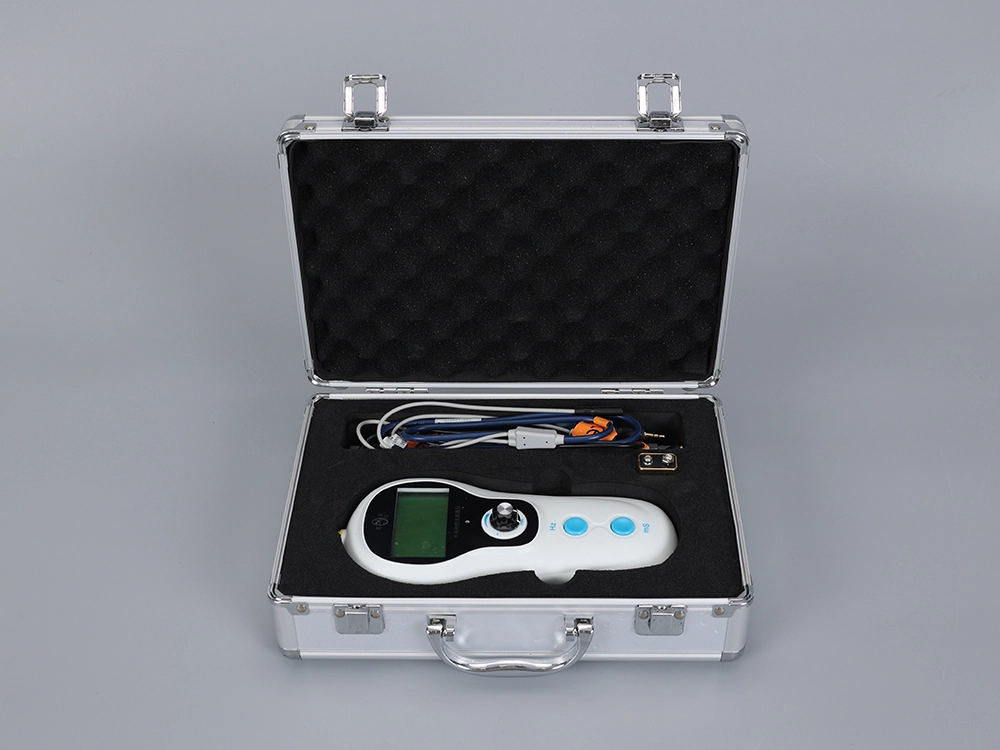
For a Peripheral Nerve Stimulator Manufacturer, the technical challenge is not simply to generate an electrical pulse. The device needs to provide stable and controlled stimulation while maintaining dependable connections between the main unit, cables, stimulating needles, or probes. Zhejiang SuJia Medical Device Co., Ltd. develops the SJ-CJY-I Peripheral Nerve Stimulator for use with stimulating needles or stimulation probes to locate peripheral nerve plexuses before regional block procedures. According to SuJia's product information, the system consists of the main unit, a pen-mode connecting cable, a CAN-mode connecting cable, and a stimulation probe.
Peripheral nerve localization refers to identifying the position of a target peripheral nerve or nerve plexus and establishing an appropriate relationship between the stimulating needle and the target before regional anesthesia is performed. Accurate localization is important because the effectiveness of a peripheral nerve block depends partly on delivering the anesthetic into the intended anatomical region rather than simply placing the needle near a general anatomical landmark.
Traditional landmark-based techniques use anatomical structures, palpation, patient positioning, and clinical experience to estimate the location of a nerve. However, anatomical variation can make the expected position different from the actual position. Peripheral nerve stimulation introduces another source of information: a physiological response generated when the electrical stimulus reaches an excitable motor nerve.
The position of the needle therefore becomes more than a visual or anatomical estimate. When an appropriate motor response is produced, the clinician receives immediate feedback that the stimulating needle is electrically close enough to the target nerve to activate it. This feedback can then be interpreted together with anatomy, ultrasound findings, and other clinical observations.
The working principle of a peripheral nerve stimulator is based on controlled electrical excitation. A stimulating needle or probe delivers a small electrical stimulus into the surrounding tissue. When the electrical field reaches an excitable motor nerve, the nerve can depolarize and generate a corresponding muscle contraction.
The resulting muscle twitch provides the clinician with a visible physiological signal. Depending on the nerve being approached, the expected motor response can differ, so correct nerve identification requires knowledge of anatomy and the expected response for the selected block.
The important point is that the device does not directly “see” the nerve. Instead, it detects nerve function indirectly through the motor response produced by electrical stimulation. This distinction is important when evaluating nerve localization technology: a positive motor response provides useful information about functional proximity, but it should not be interpreted as an exact measurement of the physical distance between the needle tip and nerve.
Clinical reviews describe peripheral nerve stimulation as a method that uses stimulation threshold as a surrogate for needle-to-nerve distance. Motor fibers can be preferentially activated under appropriate stimulation conditions, allowing the resulting muscle response to serve as practical feedback during needle positioning.
One of the most frequently discussed technical questions is why the required stimulation current generally changes as the needle moves toward the target nerve. In simplified terms, a needle positioned farther from an excitable nerve usually requires a greater stimulus to produce a motor response. As the needle approaches the nerve, the electrical field at the nerve becomes stronger, so a lower threshold may be sufficient to produce the same response.
This creates a useful relationship between stimulation intensity and needle proximity. During a nerve block procedure, the clinician can observe whether the expected motor response remains present while adjusting the stimulation intensity and advancing the needle according to the chosen technique.
However, stimulation current should not be treated as a precise ruler. Tissue conductivity, needle design, electrode configuration, nerve anatomy, patient factors, and equipment characteristics can all influence the current-distance relationship. Research has also demonstrated that motor responses may be absent even when the needle is very close to or within a nerve.
For this reason, a technically sound Peripheral Nerve Stimulator Manufacturer should position electrical stimulation as an objective physiological feedback method rather than claim that one current value can guarantee a specific needle-to-nerve distance.
The major advantage of peripheral nerve stimulation is the addition of real-time electrical feedback during needle positioning. Anatomical landmarks indicate where the nerve is expected to be, while stimulation provides functional evidence that an excitable nerve is responding to the applied stimulus.
This can be particularly useful when anatomical structures are difficult to interpret or when the target nerve is deep or variable. The clinician can compare the observed motor response with the expected response for the target nerve and make positioning decisions accordingly.
SuJia's SJ-CJY-I is designed specifically for this localization workflow. Its product page states that it is used with stimulating needles or stimulation probes to locate peripheral nerve plexuses before surgery, and that the device supports nerve stimulation and regional block anesthesia after positioning.
From a device-engineering perspective, reliable feedback also depends on more than the generator itself. The connection between the main unit and stimulation accessory needs to remain dependable throughout the procedure. SuJia therefore supplies the SJ-CJY-I with a main unit, pen-mode connecting cable, CAN-mode connecting cable, and stimulation probe as part of the product configuration.
When selecting a Peripheral Nerve Stimulator Manufacturer, clinicians and medical-device distributors should consider the complete stimulation system rather than focusing on a single specification. Stable stimulation output is fundamental because inconsistent electrical delivery can make motor responses more difficult to interpret. The design should also support appropriate stimulating needles or probes and provide reliable electrical connections throughout the procedure.
Operating controls are another important consideration. Nerve localization requires the clinician to interpret changes in motor response while simultaneously controlling needle position. A practical device therefore needs controls that can be operated efficiently within the clinical workflow without introducing unnecessary complexity.
Accessory compatibility is equally important. A peripheral nerve stimulator is part of a procedural system involving the generator, connecting cables, stimulation probe or needle, patient, and clinical technique. Compatibility between these components helps maintain predictable electrical performance.
For SuJia, the SJ-CJY-I forms part of a broader anesthesia-device portfolio. The company's regional anesthesia product category includes devices such as disposable anesthesia puncture kits and enhanced epidural anesthesia catheters, while its peripheral nerve stimulator extends the product range into peripheral nerve localization.
The practical objective of nerve localization is to support accurate positioning before local anesthetic injection. Once the clinician has identified the target nerve region and established an appropriate needle position, the block can proceed according to the selected regional anesthesia technique.
Peripheral nerve stimulation can also be used together with ultrasound. Ultrasound provides anatomical and needle visualization, while electrical stimulation provides functional information through an evoked motor response. These two methods therefore answer somewhat different questions: ultrasound helps show where the needle and anatomical structures are, while nerve stimulation helps indicate whether the nearby nerve is electrically responsive.
Current literature supports the continued role of nerve stimulation as an adjunct to ultrasound, particularly because neither method should be interpreted as an infallible indicator of needle-to-nerve position. A 2026 OpenAnesthesia review describes nerve stimulation as a useful adjunct, especially for deep or difficult-to-visualize nerves, while contemporary literature emphasizes the limitations of relying on stimulation current alone.
Therefore, the value of a peripheral nerve stimulator is best understood as part of a broader localization strategy. It can provide an additional physiological signal during regional anesthesia rather than replacing clinical anatomy, ultrasound, or appropriate procedural judgment.
As demand for more controlled regional anesthesia workflows continues to develop, the role of peripheral nerve stimulation is increasingly centered on functional confirmation and supplementary safety information. The technology is based on a relatively straightforward principle—controlled electrical stimulation followed by observation of a predictable motor response—but achieving reliable clinical feedback requires appropriate electrical performance, compatible accessories, dependable connections, and a device designed around the actual workflow of anesthesia professionals.
Zhejiang SuJia Medical Device Co., Ltd. manufactures the SJ-CJY-I Peripheral Nerve Stimulator for peripheral nerve plexus localization before surgery. Its product configuration includes the main unit, pen-mode connecting cable, CAN-mode connecting cable, and stimulation probe, supporting different clinical connection requirements.
For hospitals, distributors, and medical-device sourcing teams searching for a Peripheral Nerve Stimulator Manufacturer, evaluating the combination of device design, accessory compatibility, manufacturing capability, and clinical application is essential. SuJia's broader product portfolio covers general anesthesia, regional anesthesia, infusion, monitoring, pain management, medical aesthetics, and nursing care, providing an integrated medical-device manufacturing background for anesthesia-related applications.